How to collect birthday messages from a group and turn them into one gift
You have decided to make a birthday gift from everyone. It sounds simple. Ask a few people to send a message, collect them and put them together.
Then the replies begin.
One person sends three paragraphs over WhatsApp. Someone else records a voice note. Your aunt emails a photograph with no explanation. Two people say they will do it later. One sends “Happy birthday, have a great day!” and considers the job complete.
Now you have half a gift spread across four apps and a list of people you need to chase.
There is an easier way to collect birthday messages from a group, but it starts with giving everybody one place to contribute.
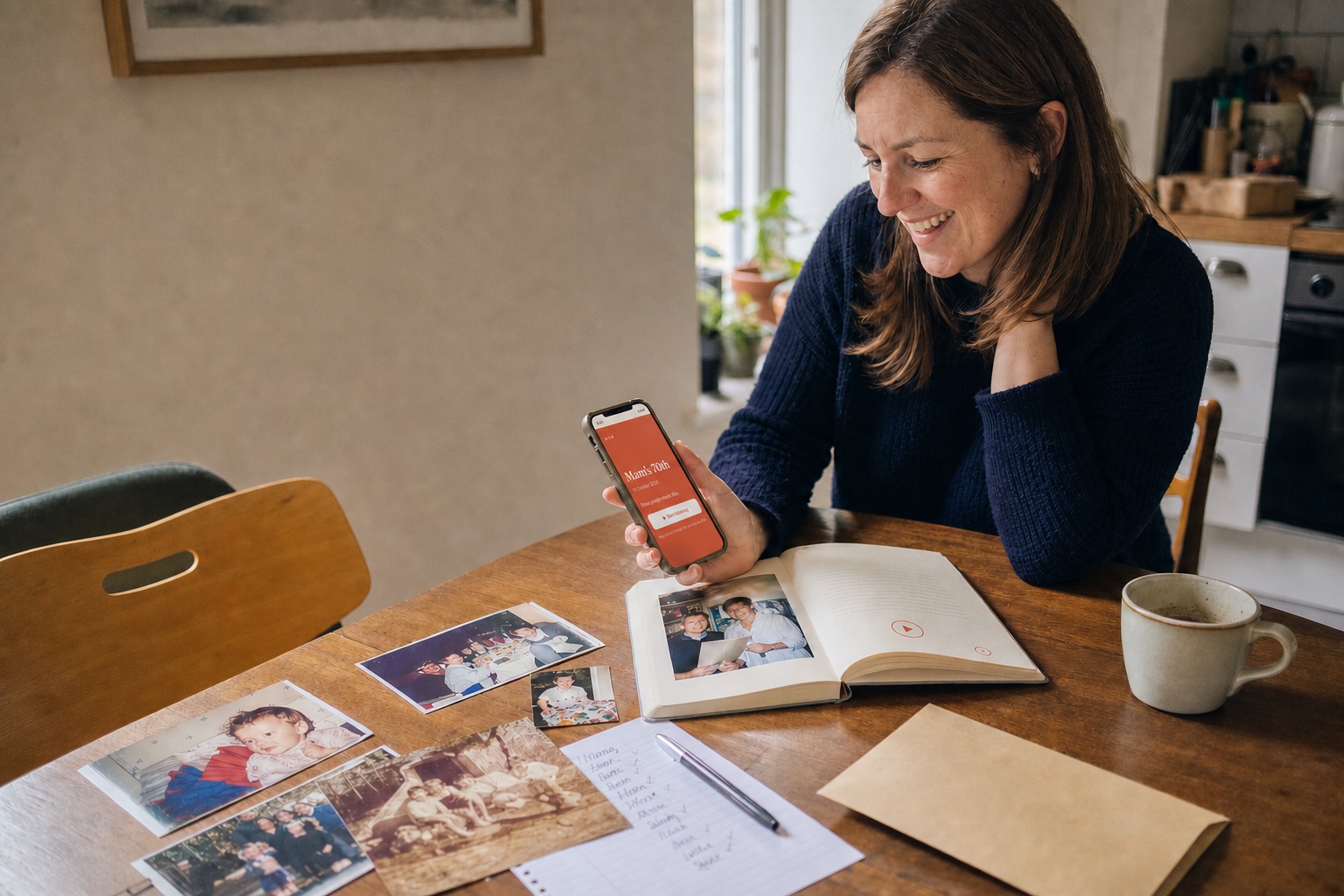
Use one link for everyone
Do not ask people to send their messages wherever suits them.
It feels flexible at the beginning. By the end, you are searching through texts, emails, WhatsApp chats and social media messages, trying to remember who sent what.
Give everyone the same link instead.
They should be able to open it on their phone without downloading an app or creating an account. The less you ask them to do, the more likely they are to finish it there and then.
One link also makes reminders easier. You can send it to the family group, share it with old friends and pass it to somebody who knows another part of the person’s life.
Ask a question instead of asking for “a message”
“Send something for Mum’s birthday” leaves people staring at a blank screen.
A specific question gives them a way in.
For a birthday, you could ask:
- What is your favourite memory with them?
- What is something they always say?
- When have they made you laugh most?
- What is something they taught you?
- Where did you first meet?
- What is one ordinary thing about them you would never want to forget?
- What should they do in the next ten years?
- What do you wish they could see in themselves?
Not everybody needs the same question. A sibling might have a story from childhood. A work friend might remember their first week in the office. A grandchild might want to describe the strange sandwich they always make.
Those differences are what make a group gift feel like it came from a group.
Let people speak
A written message keeps the words. A recording keeps the person too.
You hear their accent, their laugh and the bit where they lose their train of thought. You hear two sisters correcting each other’s version of an old story. You hear a child whispering because they think the birthday surprise is in the next room.
People do not need to give a speech. A minute or two is enough to tell one good story or say one thing they want the person to know.
If somebody does not want to record, let them write instead. The point is to include them, not make the contribution feel like homework.
Ask for the photo that goes with it
A photograph means more when you know why somebody chose it.
Instead of asking everyone to upload their favourite picture, connect the picture to their message:
- Send the photo from the day you are talking about.
- Add the oldest photo you have together.
- Choose a picture that makes you laugh.
- Send a photo the birthday person may have forgotten existed.
Now you are not collecting a folder of unexplained images. You are collecting stories with something to look at while you hear them.
Give people a deadline before the real deadline
Somebody will forget. Somebody will record theirs at 11:48 p.m. Somebody will see the reminder, put their phone down and remember again four days later.
Set the deadline earlier than you need it.
Send the first invitation while there is plenty of time. Follow up once with the whole group. Then contact the missing people directly.
A useful reminder is short:
I’m putting everyone’s stories together for Dad’s birthday. If you’d like to be in it, add yours here by Sunday. A short recording and one photo is plenty.
People are more likely to respond when they know what is expected and how long it will take.
Do not leave the finished gift as a folder of files
Collecting everything is only half the job.
A shared folder may contain every photo, recording and note, but it still feels like material waiting for somebody to make the gift.
The person receiving it should not have to work through filenames or guess who sent each voice note. Each contribution should stay connected to the person who made it.
That is what Chorus does.
One person starts the book and shares a link. Everyone records a message and can add photos from their phone. The finished book gives every contributor their own page, with their recording written out.
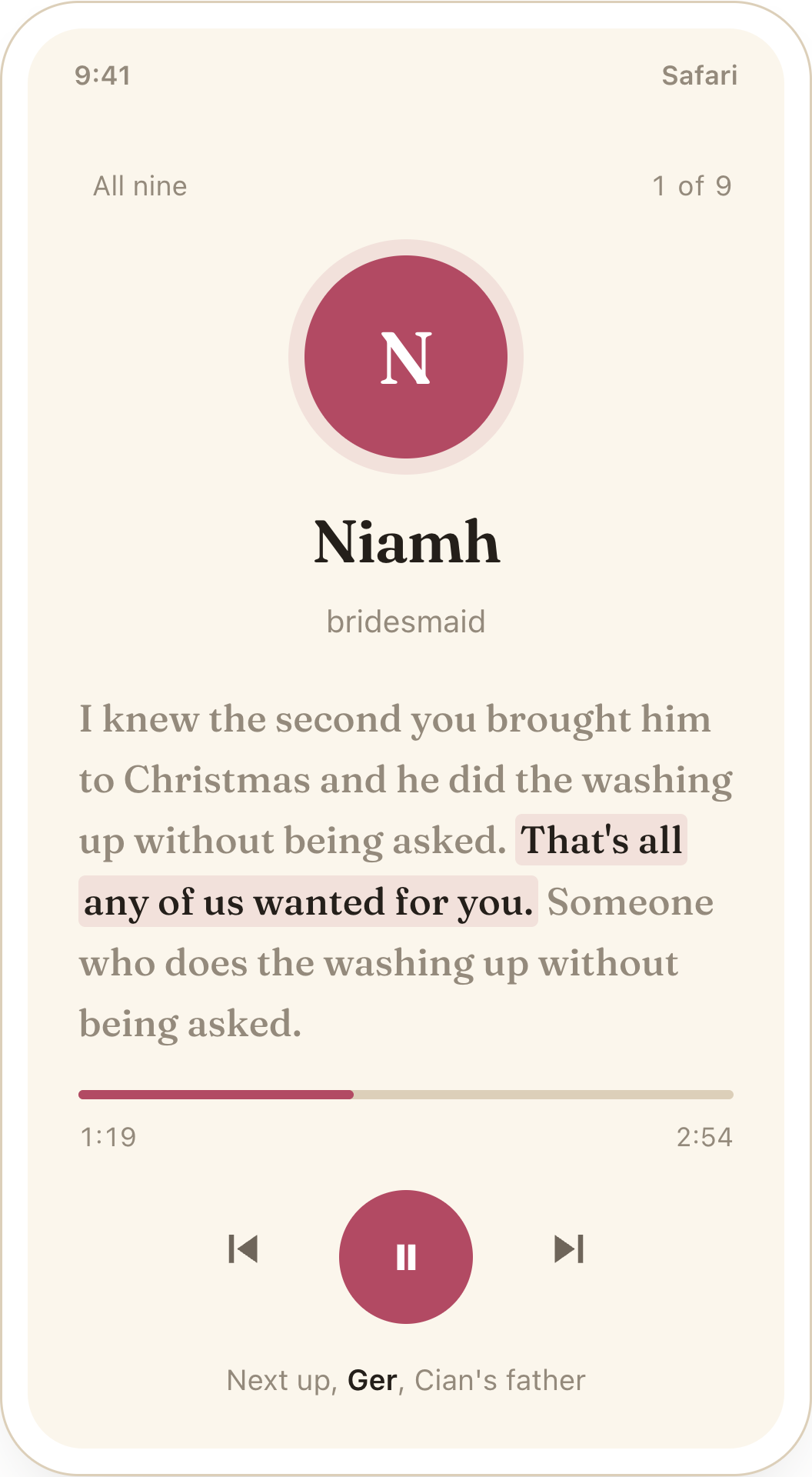
The birthday person can hear each voice from its page, read the message like a letter and keep the photographs beside the stories they belong to.
It becomes one gift from everyone, not a collection of attachments.
A group gift should feel like everybody turned up
The best part of a birthday gift from a group is not how many messages you collect.
It is hearing from the friend who knew them at eighteen. Seeing the photograph their brother kept. Reading the story their daughter has heard a hundred times but never had written down.
One person can organise it. Everyone else brings their part.
Then it all arrives as one book made for them.
How do you collect birthday messages from a group?
Give everybody one place to contribute. Use a single link that opens on a phone with no app and no account, ask a specific question rather than asking for "a message", let people record or write, ask for the photo that goes with what they said, and set a deadline earlier than the one you need.
What should you ask people to say in a birthday message?
Ask a specific question: their favourite memory, something the person always says, when they made them laugh most, something they taught them. Not everybody needs the same question, and those differences are what make a group gift feel like it came from a group.
Should people record a voice message or write one?
A written message keeps the words, a recording keeps the person too. A minute or two is enough. If somebody does not want to record, let them write instead.
How do you get everyone to send their message in time?
Set the deadline earlier than you need it. Send the first invitation early, follow up once with the whole group, then contact the missing people directly. Say how long it takes: a short recording and one photo is plenty.
What do you do with the messages once you have collected them?
Do not leave them as a folder of files. With Chorus every contributor gets their own page in the finished book, with their recording playable from it and their words written out, so it arrives as one gift from everyone.