30 questions to ask your grandparents about their life
Some grandparents can fill an afternoon without any prompting. Others will say there’s nothing interesting to tell.
A broad question such as “Tell me about your life” often gets a short answer because it is too large to know where to begin. It is easier to remember a particular kitchen, journey, school friend or first job.
The questions below are designed to bring back those details. You do not need to ask all 30. Pick three or four that suit your grandparent and let the conversation move from there.
If your grandparent says there is nothing interesting to tell, the questions may not be the problem. You don’t have to ask your grandparents to tell their whole story is the other way in: give them a memory to respond to, and gather what the rest of the family remembers.
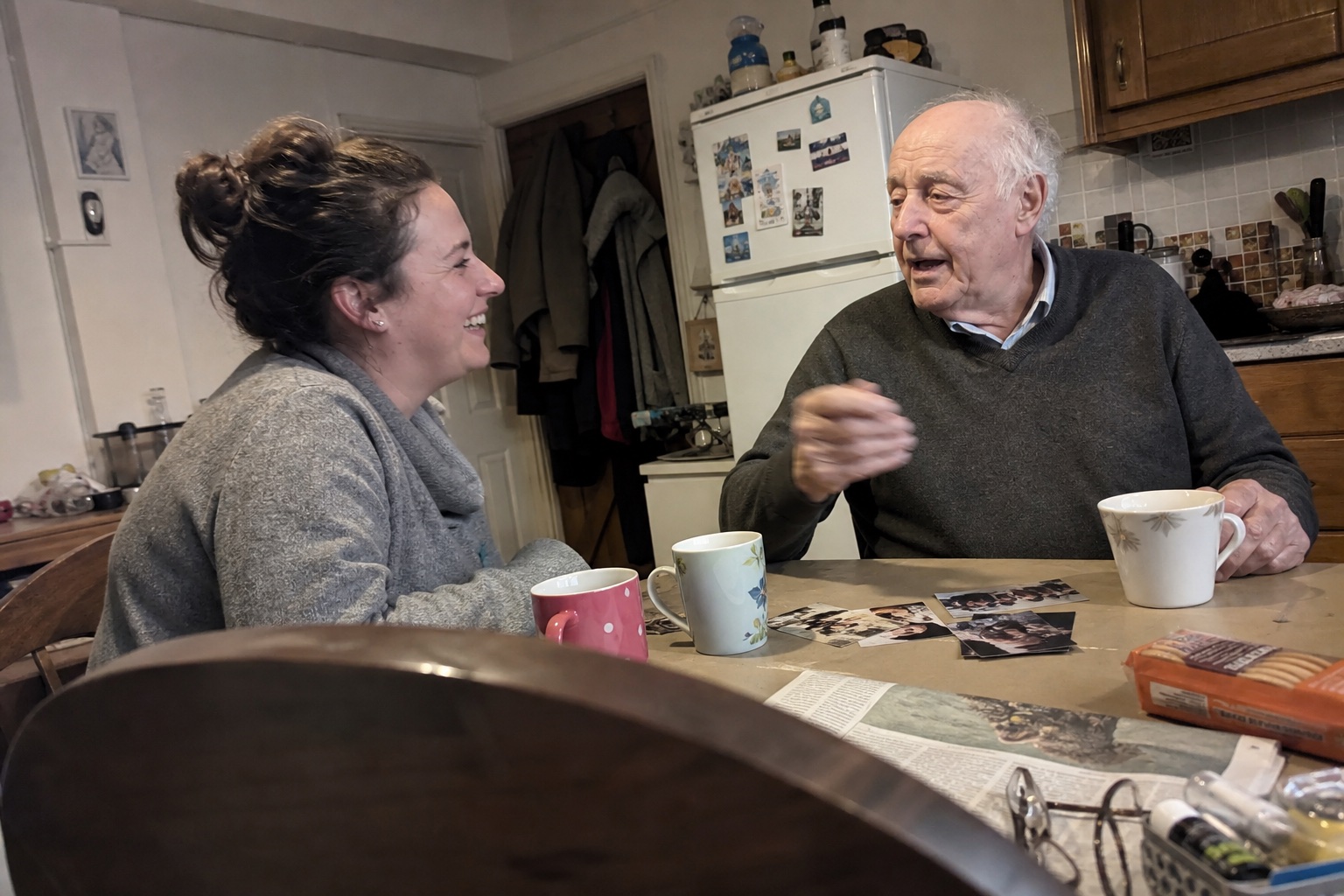
How to ask your grandparents about their life
The way you ask matters as much as the question.
A list can help you prepare, but reading through it from top to bottom will feel like an interview. A better conversation usually starts somewhere familiar.
Start with a story they already tell
Most families have a few stories that appear regularly. Your grandad may always talk about missing a train on his first day at work. Your grandma may tell everyone how she met your grandad, while he insists that half the details are wrong.
Begin there.
You could say:
“You know that story about the train? What happened before you realised you’d missed it?”
A familiar story gives them an easy place to start. Once they are talking, you can ask about the people, places and details surrounding it.
Begin with lighter memories
Do not open with the hardest period of their life. Ask about school dinners, hairstyles, childhood games, first wages or a neighbour they remember.
Lighter questions give both of you time to settle into the conversation. More personal subjects may come up on their own. If they do not, there is no need to push.
Bring one or two photographs
An old photograph gives you something specific to look at together.
Ask who is in it, where it was taken and what happened that day. Do not worry if they cannot remember the year. The curtains, clothes, car in the background or person missing from the picture may lead somewhere more interesting.
Research into photo-led reminiscence found that conversations were more enjoyable when older people were shown photographs they wanted to discuss. Your own interest in the photograph also matters. Choose pictures you are curious about rather than working through an entire album. Frontiers in Psychology
Ask for a story, rather than a fact
Compare these two questions:
“Did you like school?”
“What happened on an ordinary day at your school?”
The first can be answered with yes or no. The second gives them room to describe the teacher, classroom, journey and other children.
Oral-history guidance recommends open questions followed by simple requests for more detail. Oral History Association
Useful follow-ups include:
- What happened next?
- Who else was there?
- What was that person like?
- How did you feel about it at the time?
- Did your parents know?
- Can you still picture the place?
- What do you remember most clearly?
Leave a little silence
People need time to look for an old memory.
If your grandparent pauses, wait before changing the subject. The Library of Congress advises interviewers to give people time to reflect and pause before moving to the next question. Library of Congress
The details often arrive after the first answer.
Keep the first conversation short
Trying to cover an entire life in one sitting can be tiring. Begin with 20 or 30 minutes and see how they feel.
You can always return another day. One conversation might be about childhood. Another could begin with photographs, work or how the family changed over the years.
Ask before you record
Tell your grandparent why you would like to record the conversation and who will hear it. Let them decide whether they are comfortable.
If they want part of the conversation stopped or removed, respect that. They may be happy for the family to hear one story and prefer to keep another private. Professional oral-history guidance treats the speaker’s consent and control over sensitive subjects as part of the process. Oral History Association
Once you have their permission, place the phone nearby and return your attention to them. You do not need to monitor the screen throughout the conversation.
Questions about their childhood
- What is the first home you can remember?
Ask them to describe the rooms, who lived there and what they could see from the windows.
- What did an ordinary Saturday look like when you were young?
Ordinary days often produce better stories than major events.
- What games did you play as a child?
Find out where they played, who joined in and whether adults approved.
- Who made you laugh most when you were growing up?
This may uncover a sibling, neighbour or school friend you have never heard about.
- What were you like at school?
If the answer is short, ask about their favourite teacher, the journey to school or the trouble people got into.
- What food did you love or hate as a child?
Ask who cooked at home and what was served on birthdays or Sundays.
- Did you have a possession that mattered to you?
It could be a bicycle, coat, book, football or something they saved to buy.
- What did your family do when money was tight?
Give them the option to skip this if it feels too personal.
Questions about their parents and family
- What were your parents like at home?
People often know the names and occupations of earlier relatives but little about their character.
- Which family member were you closest to?
Ask what they did together and what made the relationship close.
- What family tradition do you remember most clearly?
It might be connected to Christmas, birthdays, food, religion or a yearly journey.
- Is there a relative you wish I knew more about?
Follow up by asking what made that person memorable.
- Which family story gets told incorrectly?
This question tends to bring out disputed details and competing versions.
- What did your grandparents tell you about their lives?
Your grandparent may remember stories passed down from people born several generations before you.
Questions about work and adult life
- What was your first job?
Ask how they got it, what they wore and what the first day was like.
- What did you buy with your first proper wage?
The answer may reveal more about the period than a general question about money.
- Which job taught you the most?
It does not have to be the job they held longest.
- Was there a decision that changed the direction of your life?
Give them time with this one. The decision may not have seemed important when they made it.
- Who helped you when you were starting out?
Ask how they met and what the person did for them.
- What are you proud of that people rarely ask about?
This gives them room to choose what counts as an achievement.
Questions about love and friendship
- How did you meet your partner?
Even if you know the family version, ask how they remember it.
- What was your first impression of them?
The first impression may not match what happened later.
- What did you do together when you had very little money?
This is often easier to answer than asking for a favourite date.
- Which friendships lasted longest?
Ask what kept the friendship going through work, moves and family life.
- Who turned up for you during a difficult period?
Let them decide how much of the difficult period they want to discuss.
Questions about the things only they know
- Is there a photograph here with a story I have never heard?
Let your grandparent choose the photograph.
- What has changed most since you were my age?
Ask for something from daily life rather than a verdict on the modern world.
- What do you miss that no longer exists?
It may be a person, place, routine, shop or way of spending time.
- What part of your life would surprise the family?
This can uncover small adventures and earlier versions of someone you have always known as a grandparent.
- Is there something I have never thought to ask you?
This gives them control of the final subject.
Do not worry about getting through the list
If the first question leads to a 40-minute story, the conversation has worked.
Listen for names and places that keep appearing. Ask about those. If they correct themselves, change the order of events or remember a detail differently from another relative, leave their version intact. Memory is personal, and two people can carry different accounts of the same day.
You can also ask another family member about the story later. Their answer may add a detail your grandparent never saw.
Ask the rest of the family about your grandparent
Your grandparent can tell you what happened in their life. Other people can tell you what it felt like to know them.
Their children may remember the songs played in the car. An old friend may know stories from before the family knew them. Grandchildren will remember expressions, habits and small acts that the person would never think to mention about themselves.
Try giving different people one of these questions:
- What is your earliest memory of them?
- What is something they always say?
- Which day with them can you still picture?
- When did they help you without making a fuss?
- What story about them still makes you laugh?
- What have you learned from them?
- Which photograph brings back a good memory?
- What would you like them to hear from you now?
This is the part Chorus was made for.
One person starts the book and shares a link with the family. Each person records a message about your grandparent and can add a photograph. Their voices and written stories are gathered into one book, with a page for every person who takes part.
Your conversation with your grandparent gives you their memories. The Chorus book gathers everyone else’s memories of them.
Start a Chorus book for your grandparent
What questions should I ask my grandparents?
Ask about particular things rather than their life as a whole: the first home they remember, what an ordinary Saturday looked like, their first job, what they bought with their first proper wage, how they met their partner, and whether there is a photograph with a story you have never heard.
How do I get my grandparents to open up?
Start with a story they already tell, keep the first questions light, bring one or two photographs, ask for a story rather than a fact, and leave a little silence when they pause. The details often arrive after the first answer.
How long should the conversation be?
Begin with 20 or 30 minutes and see how they feel. You can always return another day, with one conversation about childhood and another beginning with photographs or work.
Should I record the conversation with my grandparent?
Ask first. Tell them why you would like to record it and who will hear it, and let them decide. If they want part of it stopped or removed, respect that.
What if two relatives remember the same story differently?
Leave their version intact. Memory is personal, and two people can carry different accounts of the same day.
Research behind the advice
The practical guidance in this article draws on: